

Motion

Language

JaEn
See What's Next for KIRIN.
People & Culture

As Business Skills Change, How Can We Develop Talent for the Future?(1/3)

  • Kirin Group
  • Roundtable discussions
  • Management insights
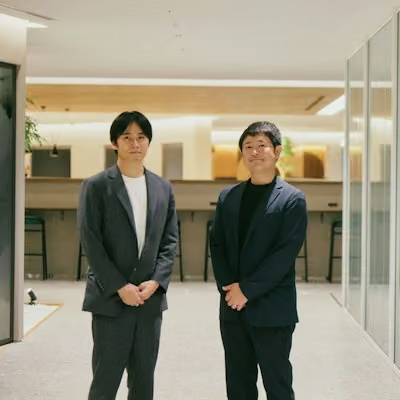
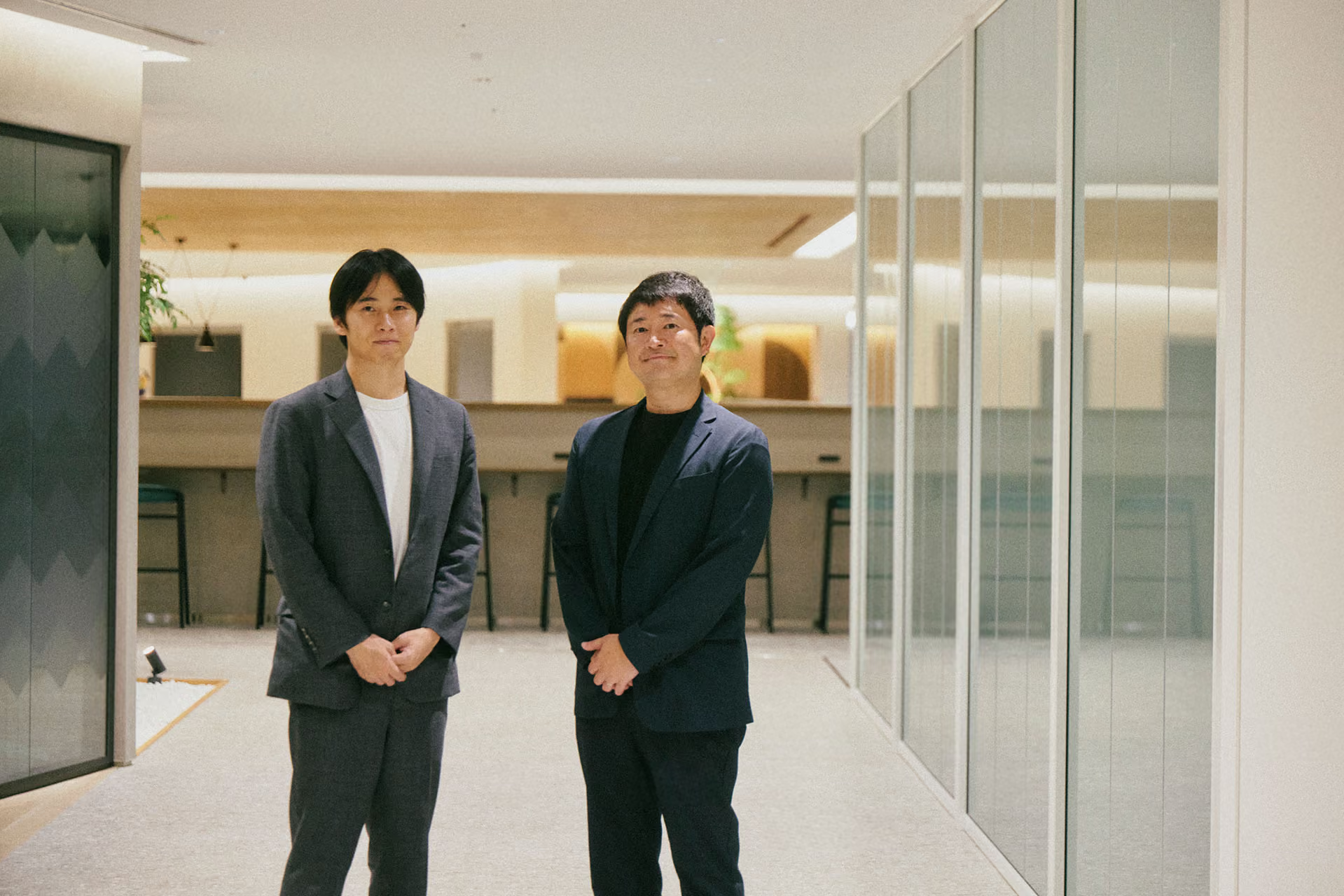
Futa Sakai and Ryuhei Asai standing side by side, with the office in the background

“Kirin’s Homework” is a series that explores the social challenges facing the Kirin Group through conversations with guests from a wide range of fields. The series brings together the roles society expects the Kirin Group to play and its vision for the future, offering new perspective and insights.

This three-part series features a conversation between Futa Sakai, an expert in talent development and building effective organizations, and Ryuhei Asai, who leads talent development at Kirin Holdings. Together, they discuss how to navigate change without losing one's footing and move forward while staying true to oneself.

In this installment, they explore how professionals can continue to grow in a rapidly changing society.
Futa Sakai

President and CEO, Momentor, Inc.

After graduating from Waseda University’s School of Law, he joined DeNA in 2015. He began his career in the Travel Division before moving to the Games Division and later to EVERYSTAR, an online fiction platform. He became President and CEO of EVERYSTAR in 2020. Alongside leading M&A initiatives and management reforms, he developed talent-development programs as DeNA’s Head of Talent Development. In 2022, he founded Momentor, Inc., where he helps organizations develop their people and build strong organizational foundations grounded in organizational efficacy and psychological principles.

Ryuhei Asai

Senior Manager, Growth Support Team, Talent Development Section, People & Culture Department, Kirin Holdings Co., Ltd.

After graduating from university, he joined Kirin Brewery Co., Ltd., where he worked in sales. He was involved in the Yokohama Red Brick Warehouse project, earthquake recovery initiatives, and regional revitalization projects, contributing to community development through the use of hops and the promotion of beer culture. Since 2021, he has served as Branch Manager of the Aichi Branch, overseeing the sales team. Since 2023, he has led talent development across the Kirin Group, responsible for the strategic planning and execution of growth support programs.

What Matters in the AI Era Is Knowing What You Want to Do Here

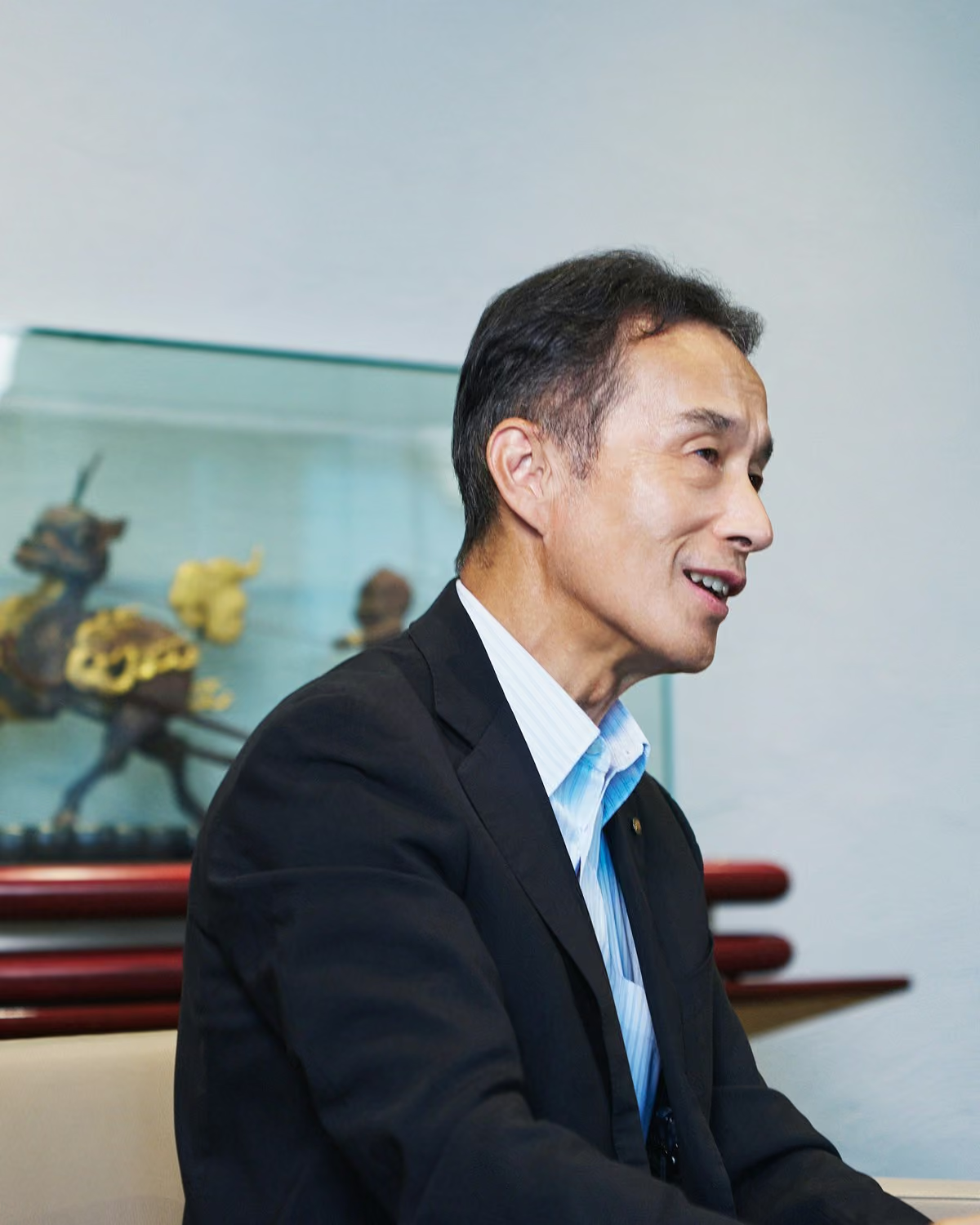
Futa Sakai and Ryuhei Asai in conversation

The pace of change in the world is accelerating, and the very definition of “growth” is becoming increasingly uncertain. Even when you learn something new, another change soon comes along. Many business professionals may feel anxious and unsettled, wondering, “Am I really making progress?” Has what it takes to grow changed from the past to the present?

sakai

It has changed, hasn’t it? When we talk about growth, we tend to think of it as “expanding the range of things we can do,” but that way of thinking is becoming less convincing. The reason is that the skills we’ve worked so hard to acquire are becoming obsolete at an astonishing rate these days. Not long ago, simply being able to say, “I can pull data and analyze it,” was a valuable asset in itself. But now, the response is often just, “Can’t AI do that?” Even skills such as running simulations for business plans or putting together polished business materials can now be replaced by AI.

For example, it may help to think of human capabilities as “apps” and “OS.” The apps are specific skills, such as analysis and creating business materials, while the OS is the underlying mindset and attitude. What’s happening now is that the apps are increasingly being taken over by machines. That’s why I think it’s become crucial to focus on how we can develop the OS underneath them.

Is that “OS” what people commonly refer to as “human qualities”?

sakai

I’d like to say so, but when you’re told, “Let’s develop your human qualities,” you’re left wondering, “Okay, but what am I supposed to do starting tomorrow?” That’s why I try to describe it as concretely as possible.

What I do is break down what we mean by “human qualities.” Let’s say that process leads us to “humility.” But “humility” is still abstract, so we take it a step further and make it more concrete—for example, by defining it as “being willing to learn from anyone and anything.” We can take it even further by identifying a positive quality in someone and asking, “I feel that just having you here puts everyone at ease. What do you pay attention to in order to create that atmosphere?” Once you break it down that far, you can translate it into actions in your daily life, right? By defining the part that corresponds to the OS in concrete terms like this, it becomes easier to consciously put it into practice starting tomorrow. The reason I tried to pair theory with habitual phrases in my training sessions was to make it easier to check our behavior and put the theory into practice more effectively.

That’s true. When it’s that specific, you can assess yourself more objectively. Mr. Asai, you’re in the Human Capital Strategy Department. Have there been times when you've felt that what’s expected of employees has changed?

asai

Yes, definitely. Even as things continue to change, I think what ultimately remains is the ability to envision what you want to do at this company. Even as AI becomes capable of more and more tasks, that’s something only people can do. And that's what makes it interesting. I feel that the importance of this will only continue to grow.
Actually, I also had the opportunity to participate in your talent development program. What I really appreciated about it was that, rather than simply taking in new knowledge, it gave me time to pause and reflect on what I truly value and, more fundamentally, who I am. From there, I was able to put into my own words what I want to accomplish at this company while making the most of who I am.
Until now, I think there was a sense in which you could grow to some extent simply by accumulating experience, even if you were just going through the motions. But going forward, I’ve come to realize that the people who have a clear sense of what they want to do here are the ones who will be able to carve out work that only they can do.

sakai

I think what you just said hits the nail on the head. AI provides answers at an incredible speed. But the initial spark—the thought, “Wouldn’t that person be happy if there were something like this?”—comes from us. We're the ones who tip the first domino. After that, we may or may not use AI. But only humans can understand what would make someone else happy and feel happy themselves when that happens.

That’s why I think we’re entering an era where the question “What do you want to do?” will matter just as much as “What can you do?”

It’s Easy to Say, “I’m Rooting for You.” But Will You Go Further and Lend a Hand?

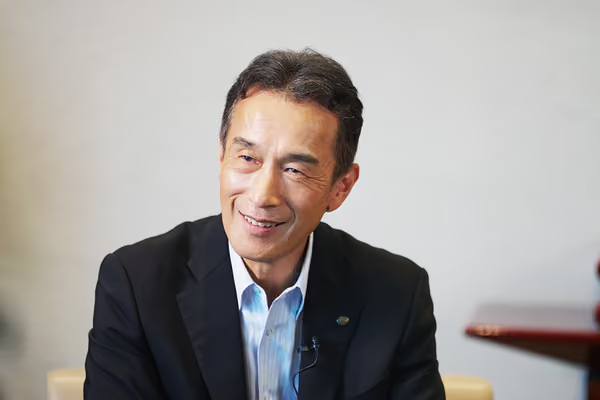
Futa Sakai with a serious expression

Even when the desire to say, “This is what I want to do” comes from within, there's only so much you can accomplish on your own when it comes to actually turning that idea into something tangible through your work, right?

sakai

Even when I see people taking on new challenges, I think it must be incredibly difficult to keep that spark of “This is what I want to do” alive all by yourself.
Come to think of it, during a training session I once led for the Kirin Group, someone shared their experience of a new business venture that didn’t go well. Then, the people around them naturally started offering encouragement, saying things like, “It’s okay—that was a great challenge,” and “Maybe you could try this next time.” It felt as though they were all sheltering the flame from the wind, helping to keep it alive. It was a beautiful thing to see.

asai

At the Kirin Group, when someone says, “I want to try something like this,” you'll probably find plenty of people who’ll respond with, “That sounds great!”
But I feel there’s actually a huge gap between simply praising someone by saying, “That’s great”, and truly coming alongside them, rolling up your sleeves and working on it together…

sakai

That gap definitely exists. If all you do is say, “I’ll support you,” you can take on the role of the “nice person” without putting any of your own resources on the line. It’s a low-cost way of getting involved and making yourself part of the story.
But what really matters is what comes after “I’ll support you”—whether you can go as far as saying, “Here's the part I can help with. What do you think?” Even if it’s something small, you’re offering your own time and effort. That alone can make a huge difference both to the value you bring to the other person and the energy in the room.
And when you take action for someone else in that way, it always comes back to you in one form or another. As the saying goes, “Kindness is never wasted.” The person who returns the favor may not be the person you helped, and it may not happen for a long time, but that kindness will definitely become a source of strength for your own “OS.” That’s why I think it’s important to be more than just a “nice person” in words.

Overthinking Every Step Can Extinguish the Spark—The Problem Is Human Nature

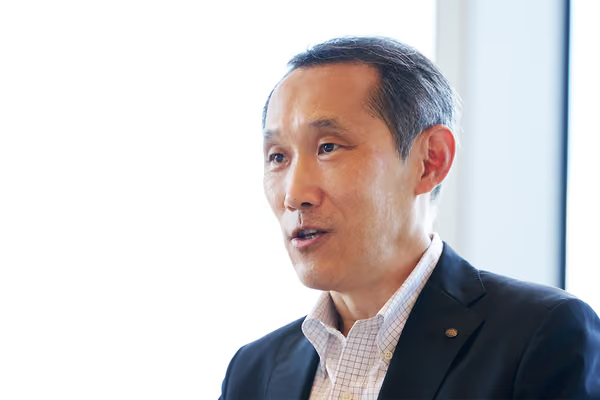
Ryuhei Asai speaking

Even when people agree to “do this together,” I feel that moving forward within an organization presents a whole different set of challenges.

asai

Exactly. It often happens that people who say “Sounds great!” during the initial planning stages suddenly become extremely cautious the moment we say, “Okay, let’s start working out the details” (laughs). “Is this really going to work?” “Have we identified all the risks?” “How are we going to explain this to management?”
As the person who initially said, "I want to do this!" is bombarded with objections from every direction, they gradually lose heart, and the spark that started it all is snuffed out. Of course, caution is necessary, but why are people so afraid of failure?

sakai

This phenomenon is sometimes called “big-company syndrome,” but I think it's really a human problem. Human beings instinctively dislike uncertainty. In prehistoric times, not knowing what might happen could literally mean the difference between life and death. That's why we seek stability and try to avoid risks whose outcomes we can’t predict. As a survival instinct, it’s perfectly rational. But when we try to take on a new challenge, that very reaction can become the biggest brake on progress.
What’s more, the workplace tends to amplify that instinct. So it’s not that large companies are cautious simply because they’re large; this is what naturally happens when people come together. I think it’s extremely important to figure out how to rein in that tendency as it grows stronger.

asai

I see. That might be why it's so difficult to bring about change, even when a company adopts a slogan like “Take on more challenges.”
When you think about it that way, an individual’s determination alone isn’t enough. It seems we also need people who will run alongside them, as well as systems that give them the push they need. That’s precisely why leaders, including senior executives, may need to do more than simply say, “We're rooting for you.” They need to demonstrate, in a meaningful way, what it really means to support someone who is taking on a challenge.

Find Words That Work for You—Don’t Let Excuses Hold You Back

Futa Sakai speaking in front of Ryuhei Asai

What can people do when they find themselves holding back?

sakai

The reasons people can’t bring themselves to take the plunge vary widely from person to person. Some hold back because they feel they “have to do things by the book,” while others think, “I don’t want to spend that much.” Still others stay silent, thinking, “If I say this, people around me might criticize me.”
In that case, the words that help people overcome their hesitation should also be different for each person. That’s why I believe it’s better to encourage people to find the words that work for them, rather than offer a single “right answer” for how to move past that hesitation.

Mr. Sakai, what are the words do you personally rely on?

sakai

The first is to ask myself, “What's the worst that could happen?” If I think through the worst-case scenario and realize, “It’s not going to kill me, and it won’t be devastating,” then I can decide, “Okay, let’s do it.”
The second is, “I will never betray the people who’ve supported me.” No matter how busy I am or how tough things get, that’s one rule I always stick to.
The third—and I'm sorry for repeating myself—is, “I absolutely don’t want to become one of those lame people who only offer empty words of support.” More broadly, by clearly defining the person I don’t want to become, I can recognize when something “doesn’t feel like me” and change the way I act.
Whenever I find myself hesitating—thinking, “Is this really worth it?” or “Will saying this cause a rift?”—I use these three principles to decide what to do.

asai

So it’s about having your own “prescription,” right?

sakai

Exactly. I call them “words that help me cross the cost-benefit gap.” If you consider only the short-term costs and benefits, there are plenty of times when you’d just end up thinking, “Well, I don’t really need to do this, do I?” But I keep certain reasons within myself that allow me to take action anyway. When my motivation comes from within, it might be, “I want to create this kind of future” or “I don’t want to have regrets when I die.” When it comes from my relationships with others, it might be, “I absolutely don’t want to betray the people who’ve helped me” or “I don’t want to work in a way that I'd be ashamed for my children to see.” These are the words that drive me forward, helping me transcend the mere calculation of gains and losses.
People fear uncertainty and worry about whether things are worth the cost. Since these are instincts that are advantageous for survival, I don’t think they’ll ever disappear. However, when it comes to living a happy life or creating something new, these instincts inevitably work against us. That’s precisely why it’s so important to have a phrase that feels real to you—one that helps you cross the “cost-benefit gap.” I believe it's essential for continuing to move forward, one step at a time, even as things change.

Continued in Part 2: Scheduled for release on November 4

Credits
Photographer
Taro Oota
Interview & Text
Yoko Sueyoshi
Editor
Ai Hanazawa

Share this article

Please do not forward or share information about alcoholic beverages with anyone under the legal drinking age.

Kirin’s Homework

The Kirin Group faces various challenges that it must address as society evolves. Together with experts in relevant fields, we explore the role only Kirin can play.

See What's Next for KIRIN.

KIRIN Group's official media platformsharing the KIRIN Group's challenges, technologies, and people.Vitalize the world through innovation

Please verify your age to view alcohol-related content. Would you like to proceed?

This site contains information about alcoholic beverages.

Year

Please also enter your month and day of birth

Month
Day

Please do not check this box if you share this device with anyone under the legal drinking age.

Please provide your country of residence.