



“Kirin’s Homework” is a series that explores the social challenges facing the Kirin Group through conversations with guests from a wide range of fields. The series brings together the roles society expects of the Kirin Group to play and its vision for the future, offering new perspective and insights.
As each person's values around work become more diverse, what does it take to bring a team together, and how can we build an organization where people feel motivated to contribute?
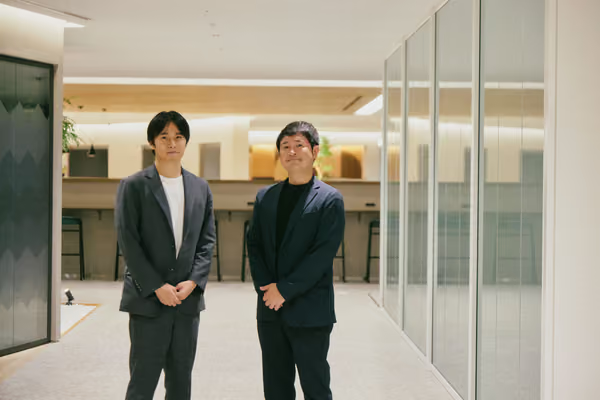
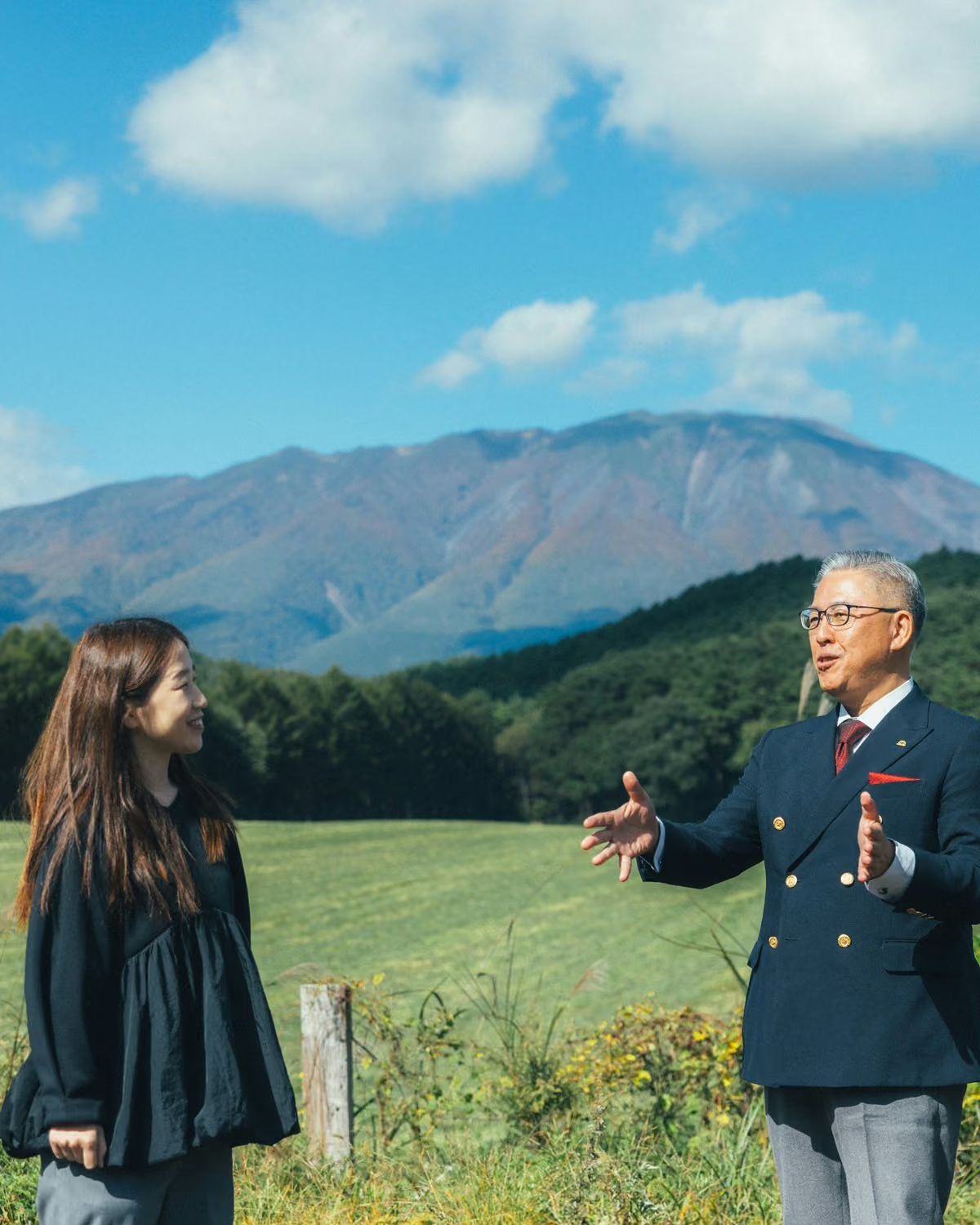
This is the second in a series of conversations between Futa Sakai, an expert in talent and organizational development who also contributes to the Kirin Group’s leadership training programs, and Ryuhei Asai, who leads talent development at Kirin Holdings. This installment, explores what leadership should look like in the years ahead and how organizations can bring out the best in their teams.
Building an Organization Where People Think, “This Team Can Do It”(2/3)
- Kirin Group
- Roundtable discussions
- Management insights
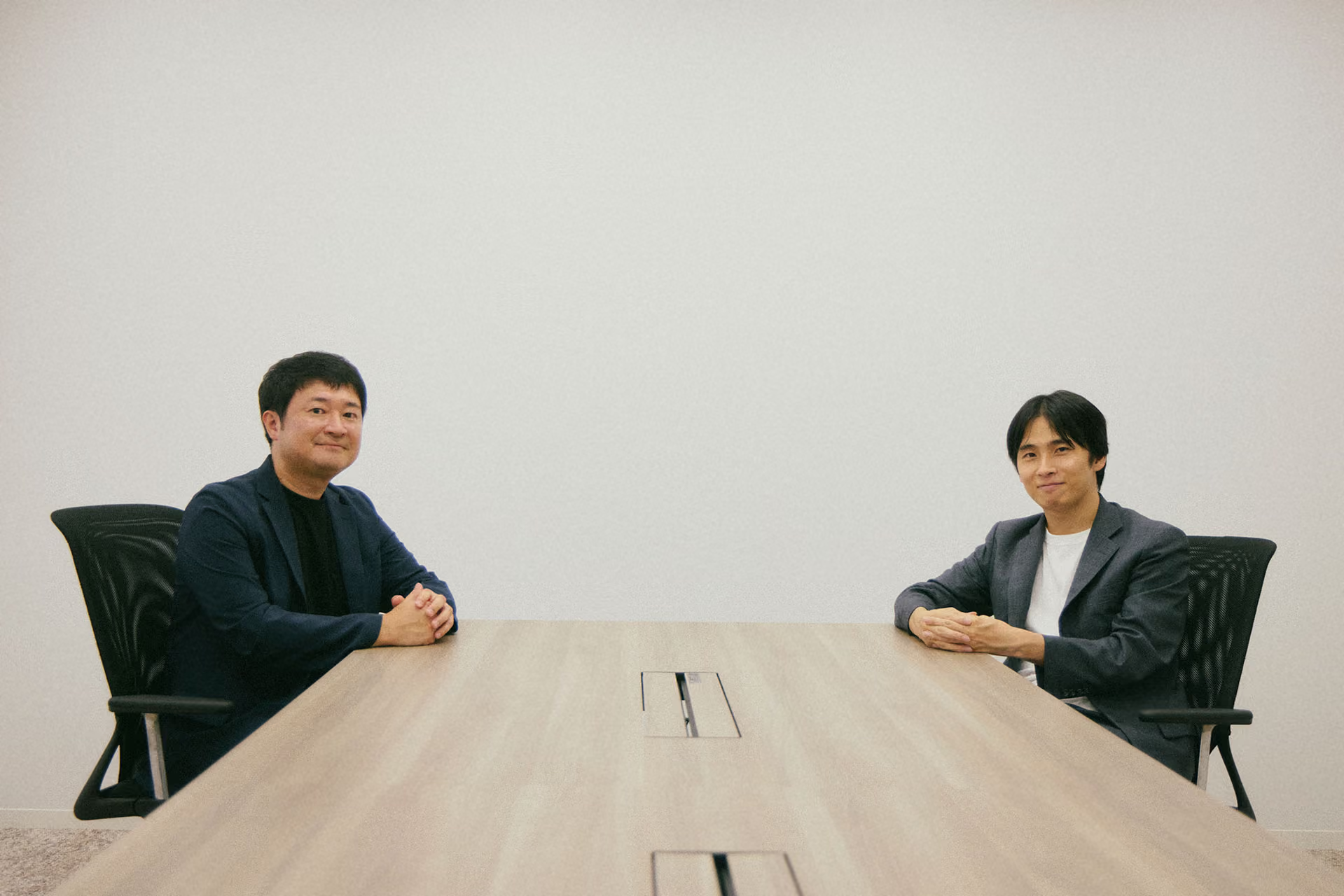

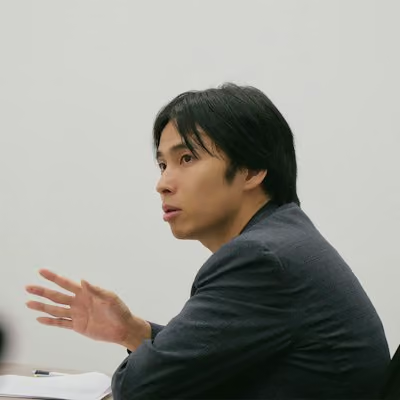
Futa Sakai
President and CEO, Momentor, Inc.
After graduating from Waseda University’s School of Law, he joined DeNA in 2015. He began his career in the Travel Division before moving to the Games Division and later to EVERYSTAR, an online fiction platform. He became President and CEO of EVERYSTAR in 2020. Alongside leading M&A initiatives and management reforms, he developed talent-development programs as DeNA’s Head of Talent Development. In 2022, he founded Momentor, Inc., where he helps organizations develop their people and build strong organizational foundations grounded in organizational efficacy and psychological principles.

Ryuhei Asai
Senior Manager, Growth Support Team, Talent Development Section, People & Culture Department, Kirin Holdings Co., Ltd.
After graduating from university, he joined Kirin Brewery Co., Ltd., where he worked in sales. He was involved in the Yokohama Red Brick Warehouse project, earthquake recovery initiatives, and regional revitalization projects, contributing to community development through the use of hops and the promotion of beer culture. Since 2021, he has served as Branch Manager of the Aichi Branch, overseeing the sales team. Since 2023, he has led talent development across the Kirin Group, responsible for the strategic planning and execution of growth support programs.
Leaders Today Need the Tools to Tackle Complexity

As people's values around work continue to diversify, the way teams are brought together seems to be changing significantly. Are expectations of managers and leaders changing as well?

sakai
People often say that the ideal leader is different today than in the past, but I don’t think that's true. Good leaders have always been people who listen carefully to others and, when the time comes, make decisions.
There's an interesting gap between the people most likely to be promoted into leadership roles and those who actually succeed as leaders. People who are brimming with confidence and know how to get their ideas across tend to seem more “leader-like,” so they're more likely to be promoted. But the leaders who consistently deliver results tend to be humble. They’re willing to listen to others, knowing they might be wrong. Then they can say, “This is what we most want to achieve, right?”
When the market is growing rapidly, a business can grow, for better or worse, even under poor or tyrannical leadership. However, when that’s no longer the case, a leader's ability to steer the business well—their true worth—makes all the difference.
Why has a leader's true worth come under greater scrutiny?
sakai
I think it's largely because what the market and customers want is changing so rapidly. In the past, there was a fairly clear “winning strategy”—a way of doing things that would produce results. But now, it’s becoming harder to achieve results unless you question the very assumptions behind that strategy.
It’s easier to understand through the concepts of “single-loop learning” and “double-loop learning.” Single-loop learning involves thinking about “how to do this better” within the existing framework without questioning its underlying assumptions too much. If the market is growing and you know how to win, the leader can simply say, “Let’s do this,” and everyone can move in the same direction. That can lead to results. In fact, it can be faster that way.
But these days, we increasingly find ourselves having to rethink things from the ground up, asking questions like, “Are we sure this is the right way to sell?” or “Aren’t we targeting the wrong customers?” That’s double-loop learning.
That’s why we need leaders who can encourage us to reexamine our assumptions and say, “Okay, let’s try changing our approach a bit.” If a leader doesn’t question the assumptions and simply says, “You’re not getting results because you lack grit,” I think they’ll fail to adapt to changes in the environment and eventually struggle to deliver results.

asai
The Kirin Group also went through a “full steam ahead” period, when we were able to grow even with single-loop learning. I think a leader’s role back then was simpler than it is now. But now, they must bring together team members with diverse backgrounds and strengths while also creating something new. Society’s expectations are also growing.
What's expected of leaders—to deliver results—hasn’t changed, but they now need tools to tackle this complexity. As a company, I feel we must provide them with more of those tools.
Three Qualities That Drive a Team: Humility, Decisiveness, and Execution

What should you focus on to become a leader who can deliver results?
sakai
If we break down what’s required of a leader, I think there are three main elements: humility, decisiveness, and execution. Humility means being open to the possibility that you might be wrong and the other person might be right. But this is easy to misunderstand. People often take it to mean, “Well, then, we should just let everyone do what they want.” But humility doesn't mean holding back. A leader has to make the final call, even while recognizing that they might be wrong: “This is what we must protect above all else in this business, and this is what we must deliver.” That’s why decisiveness matters.
And then there’s execution. Of course, you have to lead by example, but you also need to boost each person's confidence that they can do it—and the team’s confidence that it can succeed. Humility alone isn’t enough to make a decision, and even if you do make one, the team won’t move forward if no one believes they can succeed. That’s why all three need to go hand in hand.
I get the impression that humility tends to be emphasized these days. But these three qualities need to work together; if decision-making and execution are neglected, the team ultimately won’t deliver results.
That said, it’s not easy to do all three well, is it?
sakai
I think it's a high bar. But, not everyone has to be able to do it from day one. As more people in the organization become capable of doing them, we can expect that way of working to spread. Human learning is fundamentally a process of modeling. For better or worse, we imitate what we see: “That person always checks in on people who seem to be struggling,” or “They seem to enjoy listening to others.” When people see that kind of behavior, those around them naturally start acting the same way. Organizational culture works the same way—it’s ultimately shaped by individuals observing and imitating.
That’s why leaders should think not only about how they behave, but also about what might happen if others followed their example. After all, junior colleagues look to you as an example, whether you intend them to or not. When you think about it that way, I think it's important for leaders to ask themselves: "Would I be comfortable if my junior colleagues followed my example?"
A Leader's Habitual Phrases and Unseen Actions Become Part of the Culture

If a leader’s behavior influences those around them, what should they keep in mind day to day?
sakai
I think the clearest example is the phrases a leader tends to repeat. When something happens, do you tend to ask, “How are the numbers looking?” or say, “I’m glad the customer was happy”? Even that can make a big difference in what people around you take away. Humans have survived by imitating those around them, so a leader's words and actions have a direct influence on the team.
Another important factor is integrity. It’s often translated as “honesty” or “moral uprightness,” which can make it sound a little abstract. But I think it comes down to this: “Do you work in a way that you can be proud of, no matter who's watching?” It means doing the right thing even when no one is watching—like not crossing against a red light at night or not littering by tossing an empty can on the ground. In Japan, we have a saying, “The heavens are watching.” If that doesn’t resonate with you, you might ask yourself whether you'd be ashamed if your mother or child saw you doing this, or what your 10-year-old self would think.
Leaders are always being watched by those around them, and people follow their example. That’s why I think it’s very important to keep asking yourself, “Am I doing my work in a way I can be proud of, no matter who's watching?”
asai
I believe Kirin Group employees have a solid foundation of integrity. Many leaders genuinely care about their team members, and there’s also a cycle of people who were supported by senior colleagues earlier in their careers going on to support the next generation themselves. I get the impression that many people draw on the best qualities of several leaders they’ve worked with, rather than modeling themselves on just one, and incorporate them into their own management style.
At the same time, I think we’ve relied quite heavily on individual leaders’ personal warmth and instincts up to now. Even when people say, “That leader is a good manager,” they can’t explain exactly what makes them good at it. As a result, it ends up being seen as something only that person could do, and remains dependent on that individual.
Changing Organizational Culture Starts from the Ground Up

What do you think is necessary to ensure that effective management doesn't depend on the personal skills of a particular leader?
asai
I believe it’s about being able to communicate using a shared vocabulary. When I used to manage a team myself, I had a sense that “that went well” or “that was a failure,” but I couldn’t put into words why, and I struggled with that for a long time. After taking Mr. Sakai’s management training, I found the words to express those feelings. That helped me make sense of what had happened: “So that’s why it went well” or “That experience wasn’t wasted after all.” It also gave me more confidence.
For example, if we can use “reality shock” as a shared term for the experience of new employees disoriented by the gap between their expectations before joining the company and the actual workplace environment,” we’ll be able to say things like, “Are your team members experiencing a bit of reality shock right now?” or “I tried this approach.” In fact, conversations among leaders are already starting to change little by little, so I’d like to build on this momentum.
Is there anything you've made a conscious effort to do as a leader, Ms. Asai?
asai
When someone on my team does something impressive, I tell a leader on another team, “One of my team members did something great. If you run into them in the hallway, please say something nice.” When a leader they don’t usually work with says, “I heard what you did. That’s impressive,” I think it helps foster a sense across the company that their contributions are being noticed.
sakai
It’s important for that sense of recognition to spread. People naturally tend to draw a line between “us” and “them.” It’s easy to end up caring about your own department but not being very interested in the department next door.
That’s why it’s important to gradually expand our sense of who belongs to “us.” Even just hearing from someone in another part of the organization, “That person was saying this about you,” expands the circle of people who notice you.
That's how connections across the organization begin to form.
asai
I’d like leaders to be conscious of fostering those connections. That’s because the messages companies put out often use abstract language, like “the kind of company we aspire to be”—a kind of North Star. Of course, those are necessary. But on their own, they don’t tell people on the front lines exactly what they need to change. What’s important is changing our day-to-day practices on the ground, not just focusing on abstract ideals.
sakai
You’re absolutely right. The changes can be subtle. It could be nodding emphatically while listening to someone in a meeting, adding a brief comment or holding one back, or slightly changing a phrase you tend to use. That’s all.
However, when these small behaviors add up, a sense that “This team can do it” or “We can pull this off” begins to spread. I believe that’s how organizational culture changes—through what happens on the ground.
Continued in Part 3: Scheduled for release on November 12
- Photographer
- Taro Oota
- Interview & Text
- Yoko Sueyoshi
- Editor
- Ai Hanazawa