



“Kirin’s Homework” is a series that explores the social challenges facing the Kirin Group through conversations with guests from a wide range of fields. The series brings together the roles society expects of the Kirin Group to play and its vision for the future, offering new perspective and insights.
As the Kirin Group expands into new area of business, people from diverse backgrounds work side by side across the organization. What potential lies within its people and organization? A company’s strengths are often surprisingly difficult to see from within. We sometimes take for granted—and overlook—the culture and relationships among people that have been nurtured over time.
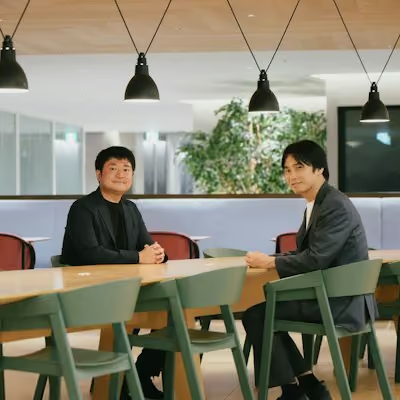
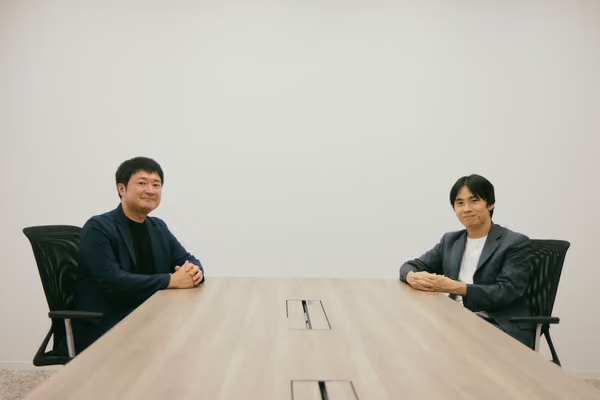
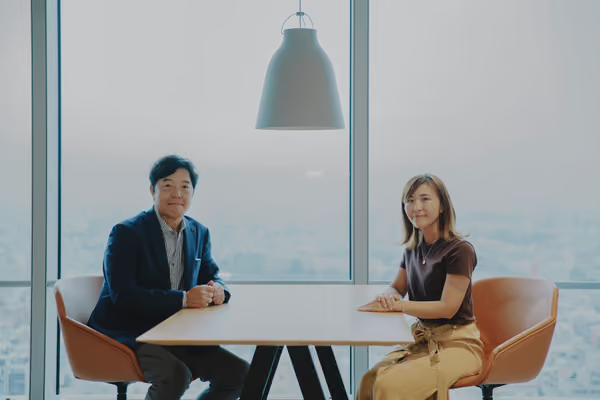
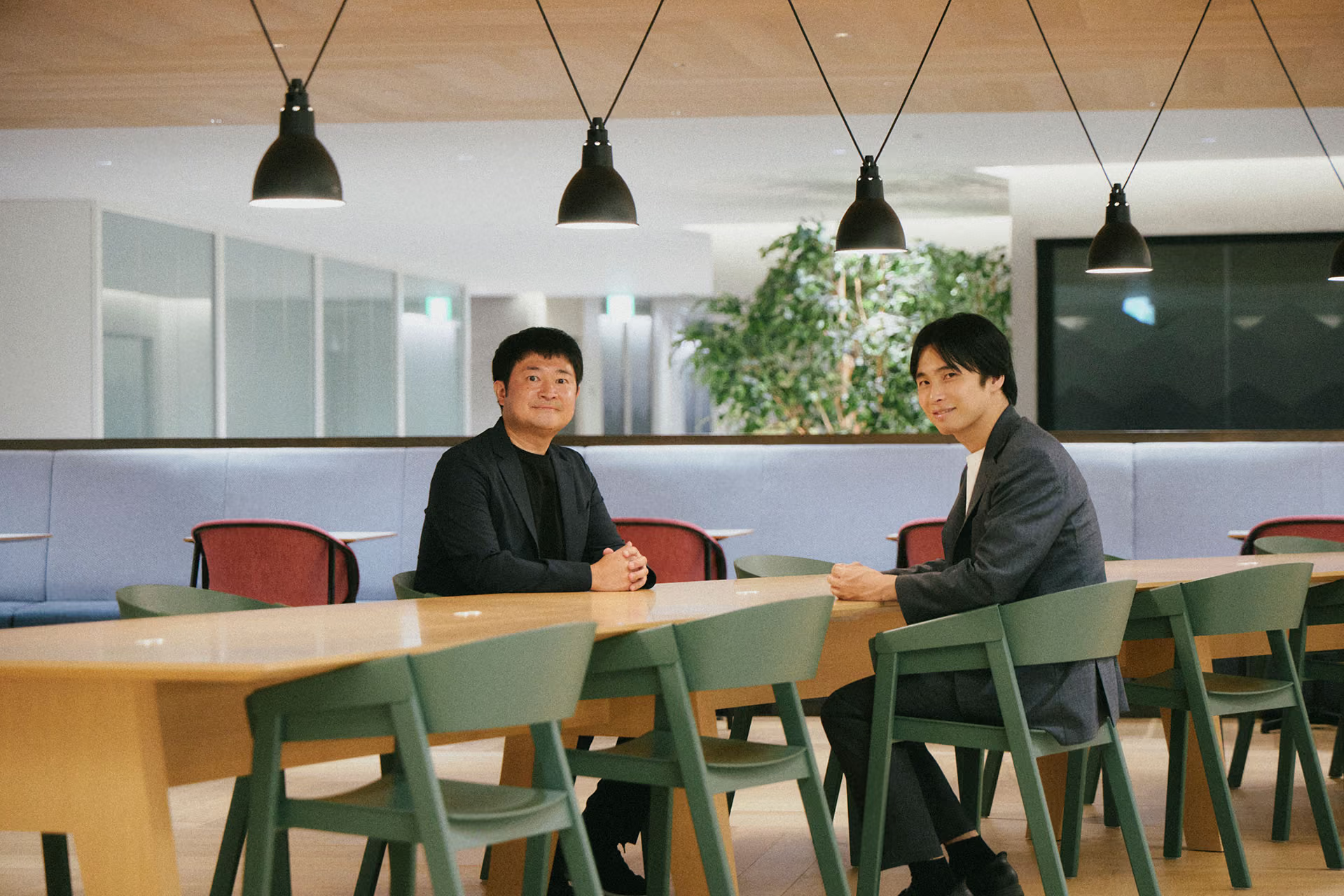
This is the third in a series of conversations between Futa Sakai, an expert in talent and organizational development who also contributes to the Kirin Group’s leadership training programs (covered in the first two articles), and Ryuhei Asai, who leads talent development at Kirin Holdings. In this installment, they discuss how to leverage the Kirin Group’s strengths and what capabilities the Group should develop moving forward.
What a Constantly Evolving Company Must Never Change(3/3)
- Kirin Group
- Roundtable discussions
- Management insights

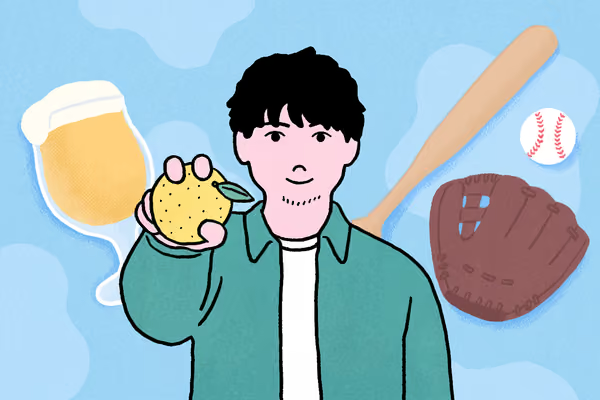
Futa Sakai
President and CEO, Momentor, Inc.
After graduating from Waseda University’s School of Law, he joined DeNA in 2015. He began his career in the Travel Division before moving to the Games Division and later to EVERYSTAR, an online fiction platform. He became President and CEO of EVERYSTAR in 2020. Alongside leading M&A initiatives and management reforms, he developed talent-development programs as DeNA’s Head of Talent Development. In 2022, he founded Momentor, Inc., where he helps organizations develop their people and build strong organizational foundations grounded in organizational efficacy and psychological principles.
Ryuhei Asai
Senior Manager, Growth Support Team, Talent Development Section, People & Culture Department, Kirin Holdings Co., Ltd.
After graduating from university, he joined Kirin Brewery Co., Ltd., where he worked in sales. He was involved in the Yokohama Red Brick Warehouse project, earthquake recovery initiatives, and regional revitalization projects, contributing to community development through the use of hops and the promotion of beer culture. Since 2021, he has served as Branch Manager of the Aichi Branch, overseeing the sales team. Since 2023, he has led talent development across the Kirin Group, responsible for the strategic planning and execution of growth support programs.
How CSV Has Taken Root in the Kirin Group

Mr. Sakai, you've worked with Kirin Group employees through management training programs. Is there anything that strikes you as unique to Kirin?

sakai
One distinctive aspect of the culture is how deeply the Kirin Group’s CSV(*) has taken root.
In my training sessions, I sometimes ask participants to consider questions like, “What joy does our work bring to customers?” and “How does that, in turn, impact society?”
Although these are challenging questions, people at the Kirin Group are able to answer them thoughtfully. I think that's because many of them look beyond their immediate tasks and consider what their work ultimately brings to people and society.

asai
The Kirin Group began promoting CSV management in 2013. At the time, people inside the company debated questions such as, “How is this different from CSR?” and “How does this relate to our work?”
I was in sales at the time, and when we were told to “shift to a sales approach that addresses social issues,” we all took the question seriously and discussed it together, starting with the question, “What does that even mean?” We've also made a steady effort to look, one by one, at how our individual jobs connected to CSV. I believe those efforts have added up to bring us to where we are today.
sakai
Maybe that’s why I don’t get the sense that anyone here is just going through the motions. It’s not just a matter of saying, “We’ll do this to hit this number”; I feel like they can actually see the faces of the people on the other end. Also, what I notice about our employees is their ability to brighten up a room. It’s not just that they’re cheerful—many take the initiative to make this a better place, or reach out if someone seems left out.
asai
It might also have a lot to do with the fact that we’ve worked with products that bring people joy and make them smile. Personally, when I was in sales, a senior colleague told me, “Our job is to bring smiles to our customers’ faces. To do that, let’s enjoy our work.” That's the mindset I learned from them.
Pioneering Spirit, Playfulness, and Logic: The Three Strengths of the Kirin Group as Seen from the Outside

What do you think is needed to further leverage these strengths?
sakai
I believe the Kirin Group has three strengths: pioneering spirit, playfulness, and logic.
First, there’s the “pioneering spirit”—a long-standing drive to create things the world has never seen before. Then there’s “playfulness”—the mindset of “if we’re going to do this, let’s make it fun” and “let’s make people smile.” At the same time, as a manufacturer, we're strong in “logic”—in our ability to get to the bottom of questions like “Why didn’t it work?” and “What is the root cause?” I believe what makes the Kirin Group distinctive is the way these three strengths each come into play.
However, if logic becomes too dominant, the balance gets a little off. Logic itself is necessary. But the more we try to come up with a neat, explainable rationale, the more we risk losing the fun—or feeling weighed down by the pressure to “get it right from the start.” When it comes to the choice between “what’s right” and “what’s fun,” if “what’s right” always wins out, that precious sense of playfulness ends up fading.
asai
We do have a strong tendency to identify areas where we’re falling short and think, “Let’s make this better.” Human Resources, in particular, tends to focus on that.
sakai
But in reality, the Kirin Group has accomplished far more than it has failed to achieve. I think it’s okay to look not just at what the group lacks, but also at what it already has. I think this is close to the mindset of “focusing on what the group has, not what it lacks.”
asai
That perspective may indeed have been missing. In terms of not fully leveraging what we have, I feel there’s still room for growth in combining everyone’s strengths across organizational and departmental boundaries. Up until now, we’ve focused on delivering on the organizational goals set for us. But that alone isn’t enough to create something new. We need to move from “addition”—where each person contributes their own results—to “multiplication,” where people draw on their individual strengths, step a little beyond their roles, build connections with others, and create results together. That's the kind of company I’m aiming for: one that develops its people and succeeds through them.
sakai
The Kirin Group already has the ingredients for that, doesn’t it? It has a broad range of businesses, advanced technology, and a nationwide sales network. It's a company where one department sows a seed, another picks it up, and yet another brings it to fruition—a multiplier effect. When coming up with new ideas, a company doesn't have to focus only on “how to solve a problem.” It can start with a vision and ask, “Wouldn't it be fun if something like this existed?” I think there's room to bring out even more of the "playfulness” I mentioned earlier.
My own child drinks Kirin Tsuyoi zo! MutekidsOpen in a new window or tab every day. I've heard that the product came from the idea of bringing together what children want to drink and what parents want them to drink. That’s the kind of idea that’s hard to come up with through problem analysis alone. It’s precisely because the Kirin Group already has a solid business foundation and a strong team. I think the atmosphere could improve even further with a boost in collective confidence—a stronger sense that “we can do even more.”
The Opposite of Justice is Another Kind of Justice. A Perspective That Turns Differences Into Strengths

The Kirin Group has set out its long-term management vision for 2035, “Innovate 2035!,” with the aim of continuing to drive innovation through the power of people and technology. What capabilities would you like to further develop to help bring this vision to life?
asai
I want to make a conscious effort to turn differences into strengths. The Kirin Group is becoming increasingly diverse, with more people from a wide range of backgrounds. We’re also hiring more people mid-career, and employees have opportunities to move between companies and departments within the group. I think this is a positive environment where new synergies are likely to emerge. However, I recognize that simply bringing together people with different backgrounds doesn’t automatically lead to something new.
sakai
For people coming into a new role, no matter how successful they were in their previous department or company, it's important to approach things with the mindset that “I’m a beginner here” and be able to say, “I don’t know, so please teach me.” On the other hand, those welcoming someone new should also pause when they think, “Something feels off,” about that person's ideas or way of working, rather than dismissing them right away, and ask themselves, “What does this person believe is right, and why are they saying this?”
I really like the saying, “The opposite of justice is another kind of justice.” Behind a different way of thinking, there is that person’s own sense of what's right. I believe it’s only when we take an interest in that person's perspective that synergy between them and us can emerge.
asai
That’s true. I’ve actually had employees who joined the company mid-career confide in me that being told, "We expect you to be an immediate contributor," it can make it harder for them to ask for advice. The more they feel pressure to deliver results, the harder it becomes to say, “I don’t understand this.”
Listening to what you said, I realized that believing in the potential of new team members and figuring out how to bring out that potential is a challenge for those of us welcoming them. It starts with being open to dialogue.
sakai
At the Kirin Group, many people don’t try to “eliminate differences”; instead, they ask, “What can we create precisely because we’re different?” So I think that foundation is already there. I think there are two kinds of diversity: “cold diversity” and “warm diversity.” We can respect the fact that “you are you, and I am me” or “that department is that department.” But if taken too far, what may seem like respect can actually lead to mutual indifference. That’s “cold diversity.”
In the Kirin Group, many people try to take an interest in the other person as an individual, wondering, “What kind of background does this person come from?” or “What kind of history does this company have?” I see that as “warm diversity”.
asai
Maybe being interested in people is just part of our nature. We’re all a little nosy (laughs). Perhaps it has something to do with beer being our original business, but I think we place a lot of value on the connections between people. Of course, there are companies that have only recently joined the group, so we still have some way to go in terms of achieving a true sense of unity.
Never Let Go of “If We Talk, We’ll Understand Each Other”: Kirin’s Homework

As our workforce becomes more diverse and our business expands, how do you think the relationship between the company and its employees should evolve for the Kirin Group to continue growing?
asai
I believe that now, more than ever, as our workforce becomes increasingly diverse, our ability to “turn differences into strengths” is truly being tested. At the core of the Kirin Group’s HR philosophy lies the principle of “respect for humanity.” This means believing in each individual’s uniqueness and limitless potential. We’ve long upheld the principle that “the company and employees are equal partners,” but I think, in practice, many employees still saw the company as responsible for their development.
Can we truly become equal partners going forward? Rather than the company taking sole responsibility for developing its people, can we genuinely believe in each individual’s potential and support them as they take steps toward their own growth and co-creation? This is a challenge we all need to keep thinking about as we move toward “Innovate 2035!”
sakai
This echoes what you said, but another thing I’ve always thought was characteristic of the Kirin Group is its effort to understand people. It’s difficult for people to fully understand one another, but when you think about it, beer has always been part of the moments when people gather and talk. It has helped create moments when people can say, “After talking, we understood each other a little better.” That’s why I think the Kirin Group has a deep-rooted sense that “if we talk, we can understand each other.”
asai
That’s something we want to continue to value. Rather than changing everything, we want to move forward by building on the strengths we already have.
sakai
It’s a bit like the saying “learning from the past to understand the present,” but it’s about not forgetting what makes the Kirin Group special. From my perspective, it’s rare to find a company with such a positive atmosphere. Even if we can’t fully understand someone, we can still make the effort. We must never forget that “talking things out leads to understanding.” I believe that’s what will be crucial as we continue to collaborate with a wide variety of people in the future.
- Photographer
- Oota Taro
- Interview & Text
- Yoko Sueyoshi
- Editor
- Ai Hanazawa