



Senpai to Kanpai is a conversation series in which younger employees shaping the future sit down over a drink with the “senpai” who have helped shape the history and culture of the Kirin Group, exchanging honest thoughts across generations.
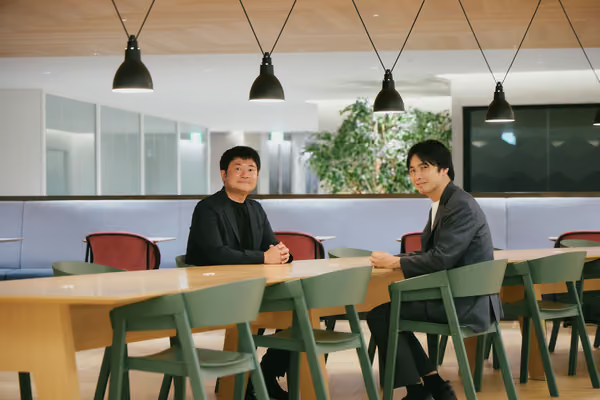
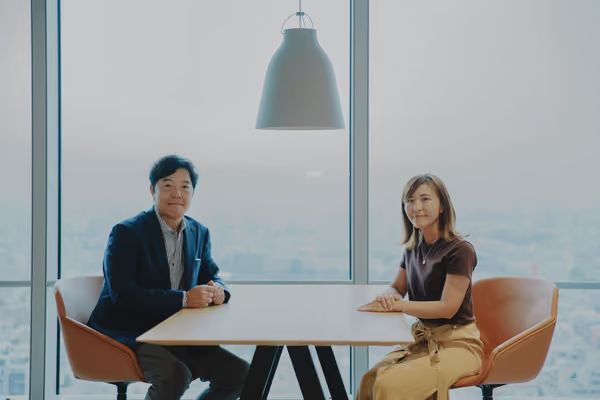
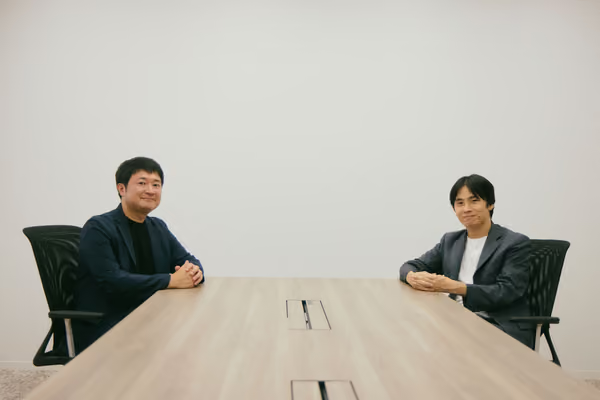
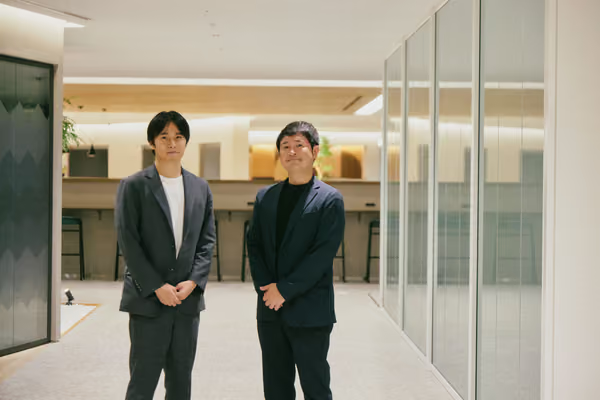
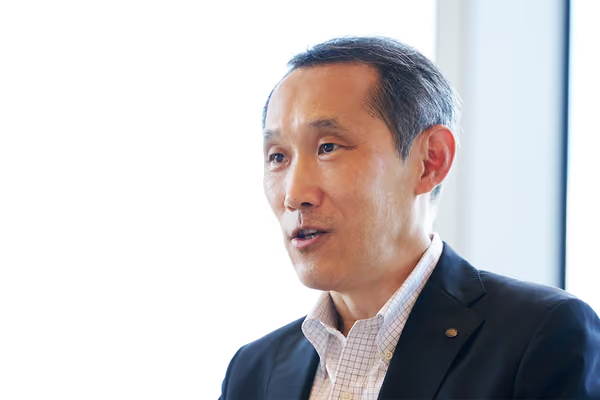
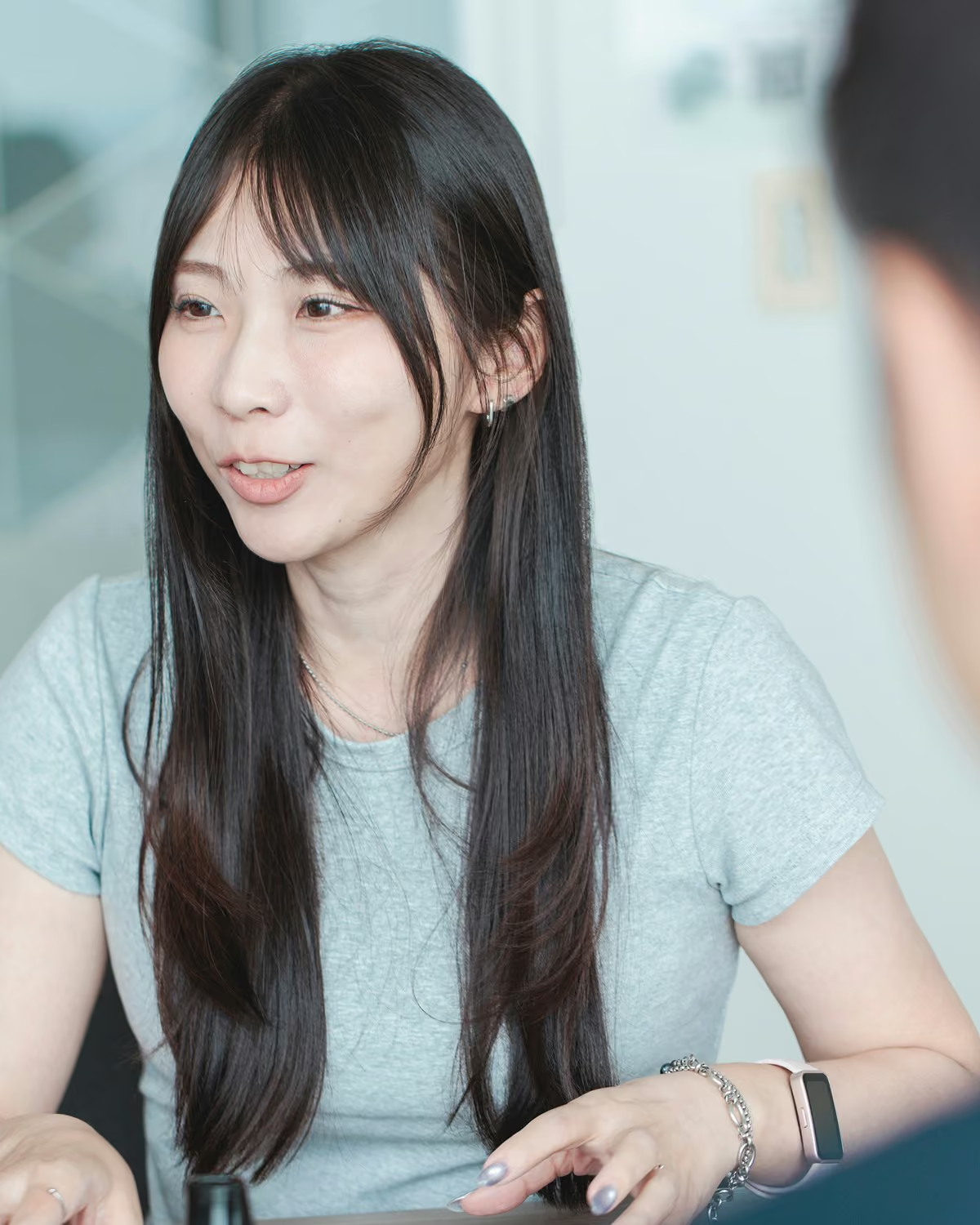
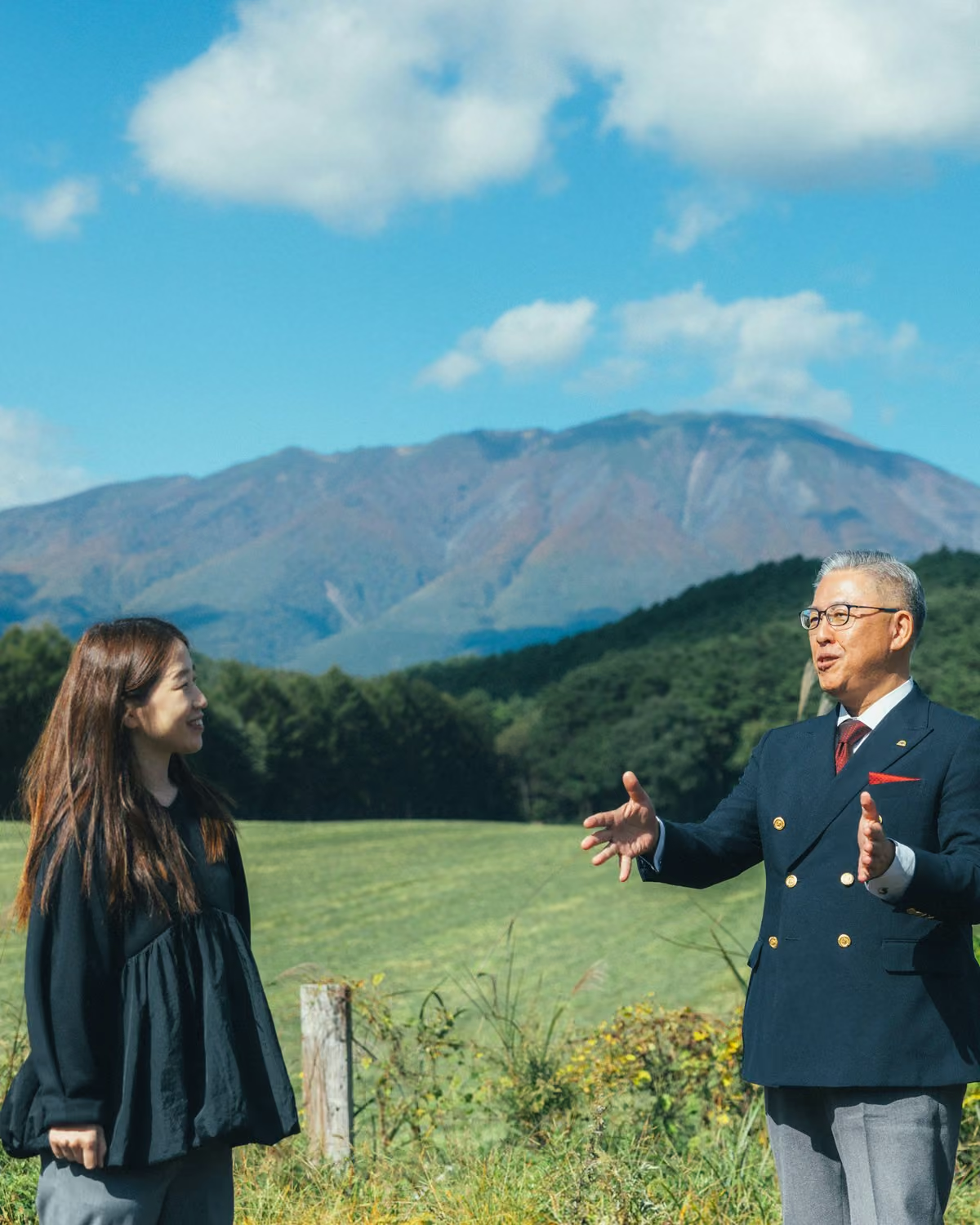
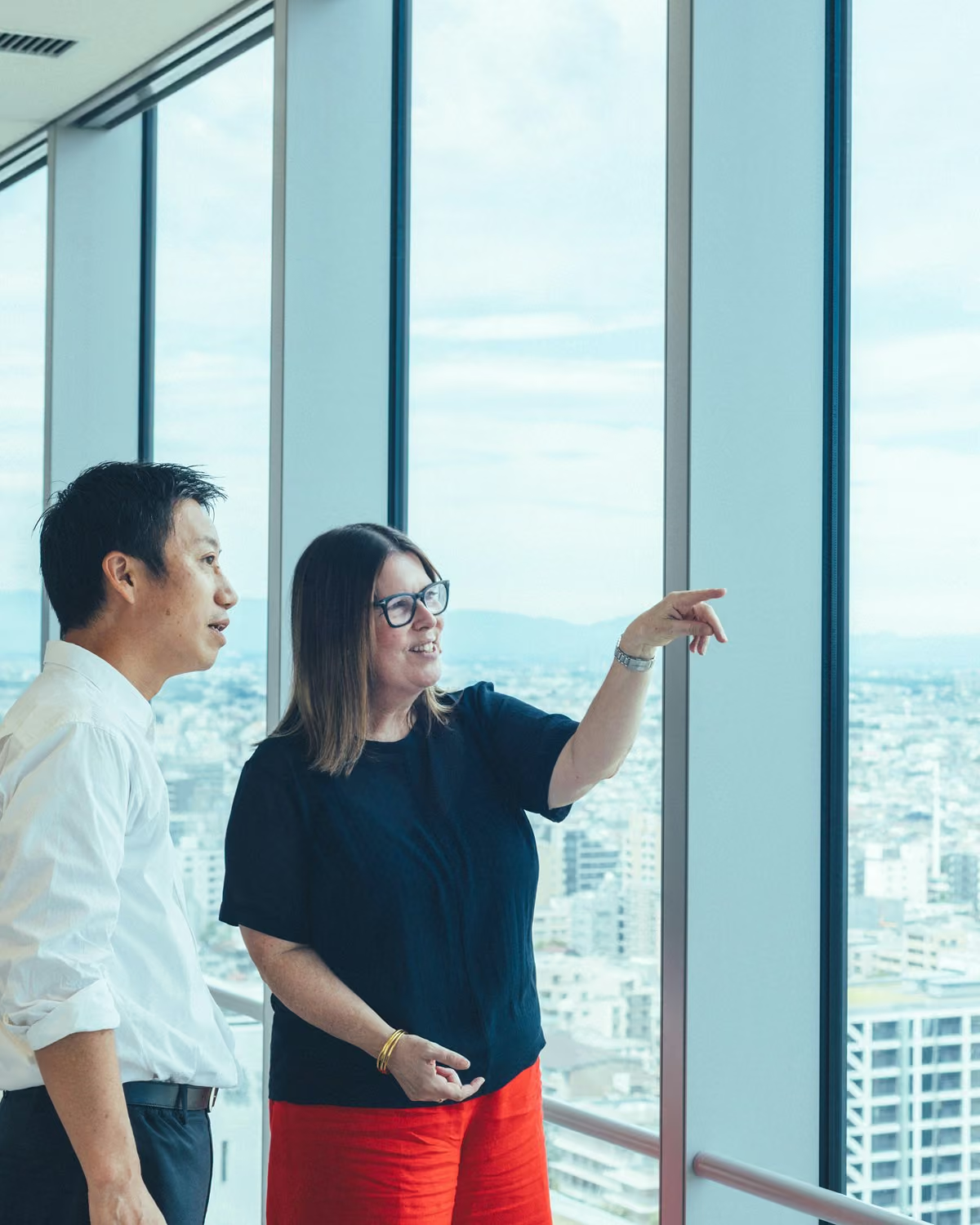
For the first installment, we bring together Takeyoshi Yamashita, who leads research and development at Kyowa Kirin, and Yuki Tanaka, a researcher in his sixth year with the company.
Despite repeated skepticism and pressure to abandon the project, Yamashita remained committed to his hypothesis and persevered, ultimately helping to advance a treatment for a rare disease. Tanaka, meanwhile, is taking a deliberately unconventional approach in the age of AI: actively going after data before forming a hypothesis.
Across generations, the two researchers speak candidly about the essence of research, how to confront failure, and the conviction, professional pride, and the ability to bring others on board that researchers need to turn an idea into a breakthrough.
Curiosity and the Courage to Pursue What You Want Can Open the Door to New Medicines: Takeyoshi Yamashita × Yuki Tanaka, Kyowa Kirin
- Customer-Centric / Patient-Centric
- Kyowa Kirin Co., Ltd.
- Pharmaceuticals
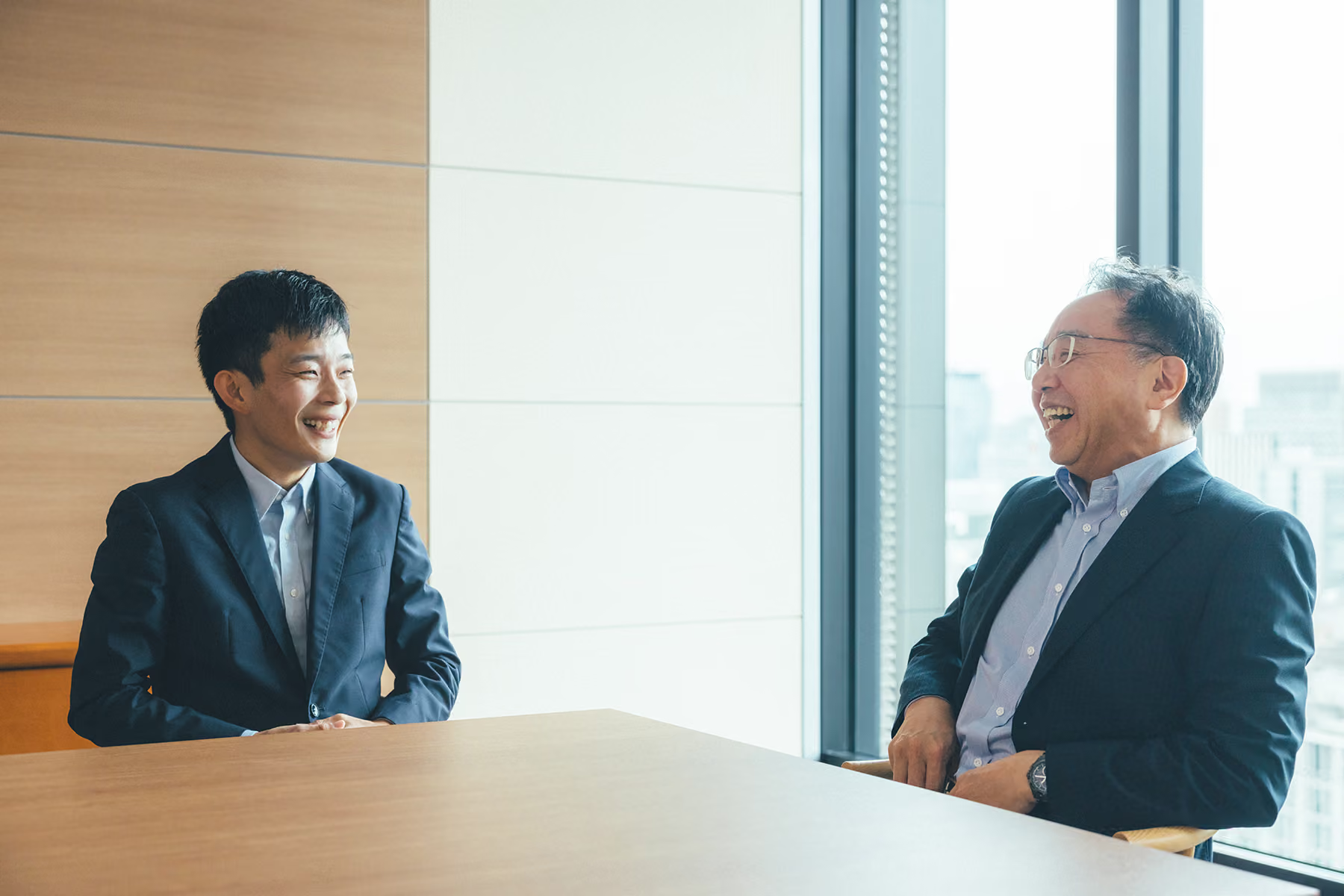
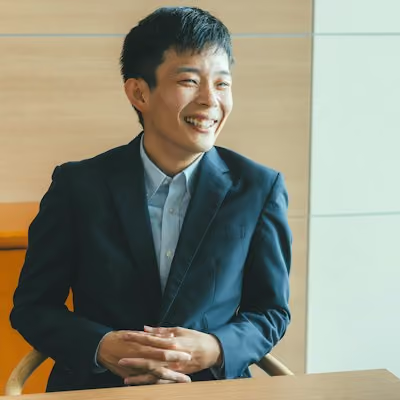
Takeyoshi Yamashita
Director, Executive Vice President and CSciO (Chief Scientific Officer), Kyowa Kirin Co., Ltd.
After completing a master’s degree at Kyoto University’s Graduate School of Pharmaceutical Sciences in 1987, Yamashita joined Kirin Brewery’s pharmaceutical business. He made a major contribution to the creation of an antibody therapy for a rare bone disease. After serving in key positions in product strategy and corporate strategy, he assumed his current role, overseeing research and development across Kyowa Kirin.
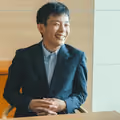
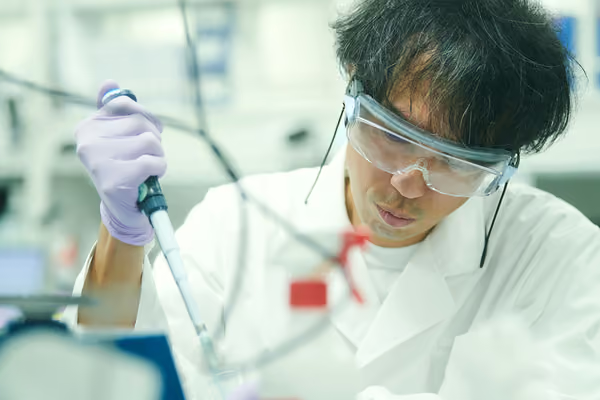
Yuki Tanaka
Innovation Center, Research Division, Kyowa Kirin Co., Ltd.
At the time of the interview, Tanaka was in his sixth year with the company.
With a background in pharmaceutical sciences, he works in early-stage discovery research, at the very beginning of the drug discovery process. Using raw data generated through his own experiments, he seeks to identify previously unknown drug targets and generate new hypotheses.
A Culture Where Every Researcher Takes Ownership


Tanaka
I’ve really been looking forward to the opportunity to speak with you, Yamashita-san. Thank you for joining me today.

Yamashita
Likewise. I hope our conversation will take me back to when I first started out, while also giving me a chance to hear about what is happening on the front line of research today.
Tanaka
Let me jump right in. When you began your career as a researcher, what kind of future did you envision for yourself? I’d also love to hear how that compares with the path your career actually took.
Yamashita
To be honest, I never had a meticulously planned career path from the beginning.
When I was in graduate school, biotechnology was beginning to gain tremendous momentum. All I wanted was to go somewhere I could pursue research the way I wanted. I even told companies during interviews, “I’ll go to a company that lets me spend at least ten years doing basic research.”
Tanaka
Telling an interviewer that you wanted ten years to focus on basic research is pretty bold!
Yamashita
I was lucky. Kirin Brewery offered me a position when I was still in the first year of my master’s program. Before graduating, I was given a place at the research institute, almost like an internship, and I had already begun proposing my own research topics before officially joining the company.
So by the time I started working there, my own research project was already underway.
It was an era when researchers could discover an unknown biological factor and see that discovery lead directly to a groundbreaking medicine. Kirin itself had only just begun moving into the pharmaceutical business and was still assembling its research team, so we had a great deal of freedom.
The research institute was quite small, with many researchers in their twenties. In some ways, it felt like an extension of university. I remember genuinely enjoying the process of searching for and discovering new biological factors.

Tanaka
I joined Kyowa Kirin after completing graduate school. When I talk with friends who joined other companies, I realize how deeply rooted the bottom-up culture is here.
Individual researchers are given ownership of their projects, along with both the responsibility and freedom to pursue them. Hearing your story makes me feel that the open culture you and others built back then has been passed down to us today.
Yamashita
I think that’s true. From the beginning, this has been a company with a strong commitment to R&D, along with a real sense of urgency that we would not survive unless we created value ourselves.
The organization was still small, so researchers had to propose their own projects and carry them through all the way to development. There was a fundamental belief that unless we created new value with our own hands, the company could not grow. That naturally gave researchers a very strong sense of ownership.
As Kyowa Kirin grew, people who had spent ten or twenty years in research began moving into areas such as business planning and management, eventually taking leadership roles across the company.
In other words, more and more people throughout the organization came to understand what research actually looks like on the ground, including how difficult it can be.
I think that history naturally fostered an organization-wide understanding of research and a culture that respects an individual researcher’s inner drive to say, “This is what I want to pursue.”
Kyowa Hakko Kirin Co., Ltd. was established in 2008 following the acquisition and merger of Kyowa Hakko Kogyo by Kirin Holdings Co., Ltd. The company changed its name to Kyowa Kirin Co., Ltd. in 2019.
A Treasure Hunt Through 300,000 Clones: Internal Pressure and 100 Samples a Day
Tanaka
If we were to name the biggest turning point in your career as a researcher, it would have to be the discovery of a hormone,* which eventually led to a treatment for a rare disease
Yamashita
If that hadn’t succeeded, I honestly have no idea where I would be or what I would be doing today. (laughs)
After joining the company, I started out studying bone before shifting my focus to mineral metabolism. At the time, researchers were debating the existence of a hypothetical factor known as “phosphatonin,” which was thought to lower phosphate levels in the blood.
There were plenty of theories arguing that no such factor existed. But the more I investigated, the more convinced I became that it absolutely had to exist.
Tanaka
With so much skepticism even within the scientific community, what made you believe in it so strongly?

Yamashita
Through a collaborative research project, I had the opportunity to review information about patients with a rare disease.
The disease causes abnormally low phosphate levels in the blood because of a tumor somewhere in the body. What struck me was that when the tumor was removed, the patients’ symptoms improved significantly.
The moment I saw that, I thought, “The substance causing this must be hiding somewhere inside the tumor.”
That was the beginning of countless days spent examining the genes in the tumor one by one. There were around 300,000 candidates.
I would run experiments during the day and check the results late at night. I repeated that process every single day for three months.
Tanaka
That sounds like searching not just for a needle in a haystack, but for a single speck of gold in the desert.
Yamashita
It really did feel like a treasure hunt.
And the reaction inside the company was anything but encouraging. My manager gave me a clear deadline: “If you don’t have results within six months, we’re shutting down the project.”
There was constant pressure from management and those around me to shift toward a project with greater market potential. And every time the company’s direction or leadership changed, I would hear, “You’re still working on that?”
But I felt strongly that after coming this far, I couldn’t simply abandon it halfway through. I was determined to produce results.
So I kept negotiating and pushing back, asking them to let me continue until I had taken the research as far as I possibly could.
“How Are You Ever Going to Deliver Results Like That?” Even a Failed Promotion Couldn’t Shake His Conviction
Tanaka
Weren’t you anxious in a situation like that?
Yamashita
I was worried that I might not get results. But I never worried that the hypothesis itself was wrong.
My internal evaluations, on the other hand, were terrible.

Tanaka
What happened?
Yamashita
About six months before we discovered the hormone, I had an interview for a promotion to management.
One of the interviewers turned out to be a former manager of mine. At the time, my research was still classified as a “pre-project,” the stage before becoming an official research project.
During the interview, he challenged me: “If all you work on are these pre-projects, how do you expect to achieve anything?”
I argued back, “I can deliver results.” Neither of us budged.
And in the end, I failed the promotion assessment. (laughs)
Even so, I think my desire to prove my hypothesis was stronger than anything else.
Tanaka
What did it feel like when you finally identified the hormone?

Yamashita
It was incredibly satisfying. I finally had proof that I had been right.
But the challenges did not end there. The drug I was trying to create was an antibody drug targeting the hormone I had discovered, intended for a rare bone disease, and it was expected to be highly effective. At the time, antibody drugs were still uncommon, and it was anticipated that they would be very expensive.
Through an external consulting firm, we conducted market research with KOLs, or key opinion leaders, in the United States. Their response was blunt: existing phosphate treatments were already sufficient, so there was no need for an expensive antibody therapy.
That feedback once again led to calls within the company to lower the development priority.
Tanaka
How did you manage to move the project forward from there?
Yamashita
While visiting the United States to present my research, I had an opportunity to meet directly with the head of a patient organization.
When we exchanged views on the potential of antibody drugs, they expressed strong hopes, telling me, “Please, don’t give up on developing this treatment.”
That conversation made me realize just how great the gap was between a physician saying, “Existing treatments are sufficient,” and the daily reality of patients who had to take large quantities of medication while enduring significant side effects.
From there, I worked with Tomohiro Sudo, who was then leading development in the United States and now serves as President of the JAPAC Region, and Masashi Miyamoto, who was then responsible for product strategy in the Planning Department and now serves as Representative Director and Chairman, as well as many others. Together, we addressed the commercial and manufacturing challenges one by one and ultimately secured approval from the management committee.
An Unconventional Approach Powered by the Latest Technology

Yamashita
Now I’d like to hear about you, Tanaka-san. You’re in your sixth year with the company. What kind of challenge are you taking on at the Innovation Center?
Tanaka
I currently work in early-stage discovery research, right at the very beginning of the drug discovery process. And I’m deliberately trying an approach that runs counter to the conventional way of doing things.
Drug discovery at pharmaceutical companies typically starts with patient needs. Researchers form a hypothesis based on those needs, then test it.
With the project I’m working on now, however, we collect the data before forming the drug discovery hypothesis.
Yamashita
What does that look like in practice?
Tanaka
We begin by comprehensively generating antibodies that alter the functions of a particular family of molecules, something no one has done before.
We then administer those antibodies to cells experimentally and observe what actually happens biologically.
Only after we have seen the raw data do we begin asking, “What kind of disease could this phenomenon potentially lead to a treatment for?” That is how we build our drug discovery hypothesis.
AI technology is developing incredibly quickly. I have a concern that if we rely entirely on logic to construct perfectly tidy hypotheses, researchers around the world may all end up arriving at similar ideas.
In that kind of environment, I believe one of the keys to remaining competitive as researchers is possessing raw data that no one else has.
Yamashita
I think that’s a fascinating perspective.
If you look back historically, organic chemistry researchers once used a very hands-on approach: they would systematically synthesize potential drug compounds and test them one after another to find out what effects they had.
In a sense, you’re revisiting that gritty, painstaking style of exploration, which was once dismissed in cutting-edge biotechnology grounded in rationality, and approaching it from a new direction using the latest technology.
It’s an exciting challenge.
Tanaka
Thank you. We only launched the project about six months ago, so it is still too early to point to concrete results.
But what drives me is a powerful curiosity: I want to be the first person to discover a phenomenon that no one else has ever seen.
Having the Boldness to Step Into Someone Else’s World
Tanaka
Looking back at yourself as a young researcher, if you could give your younger self one piece of advice, what would it be?
Yamashita
I’d tell myself, “Be more open, and more shameless about reaching out to people.”
Tanaka
Shameless?

Yamashita
Yes. When I was younger, I was so particular about my own research that I often thought, “Even if I explain this specialized work, my manager or people in other departments probably won’t understand it anyway,” or, “It’s too much trouble to explain everything from the beginning.”
So I would give up before really trying, and conversations would remain superficial.
Tanaka
Honestly, I recognize that in myself as well. There are moments when explaining something feels like a burden because I think, “Do I really have to start all over again?”
Yamashita
Exactly. (laughs)
But when you put up that wall and try to handle everything yourself, you are also throwing away opportunities to gain valuable support and insight from others.
And when you ask someone for advice, don’t just stop at a superficial question. Push a little further. Ask, “Please tell me what the real trick is,” even if you feel you might be imposing.
People who are open and unafraid to step into someone else’s world. People who are open and unafraid to step into someone else’s world are ultimately better at bringing.
Tanaka
Unless we keep communicating our passion in your own words, we’ll never find people who are truly willing to join us.
Yamashita
Research may look like an individual pursuit, but ultimately it is a team effort.
In today’s drug discovery environment especially, innovation cannot happen without collaborating with universities, startups, and professionals from different fields.
It is essential to actively engage with the world outside the company, expose yourself to different perspectives, and continuously update your own knowledge.

Tanaka
As one person working at a pharmaceutical company, contributing to patients is of course the fundamental purpose behind what we do.
But speaking with you today has reminded me that underneath it all, what actually drives research is our own curiosity and the things we personally want to pursue.
Yamashita
Exactly.
Of course, the fundamental purpose of a pharmaceutical company, delivering value to patients, must never waver.
But at the starting point of the long journey of research is something deeply personal in every researcher:
“I have to prove this hypothesis.”
“I want to uncover a phenomenon that no one has ever seen before with my own hands.”
You might call it ego. You might call it passion. But that personal drive is where research begins.
Tanaka
I feel the same way. Even when an experiment doesn’t result in the data I expected, I genuinely enjoy thinking about what approach I should try next.
Yamashita
You can’t beat someone who is genuinely enjoying what they do.
In drug discovery research, the chances of getting exactly the result you hoped for on the first attempt are extremely small.
If you are working on something only because someone told you to, a single failure can be enough to break your motivation.
But if it is a project you genuinely wanted to take on, even failure becomes valuable data for your next hypothesis.
Tanaka
It makes me realize that the essential strength of a researcher isn’t having a perfectly polished success story. It’s having the determination to keep pursuing your hypothesis even when you repeatedly run into walls.
“Back to the Labs.” The Energy of the Front Line and Innovation Born Through Dialogue

Yamashita
There is one thing I hope to see from your generation, Tanaka-san: conviction with real force behind it.
Tanaka
Force?
Yamashita
Yes. The kind of determination that says, “I am going to make this research succeed. I know we can do it.”
When you pursue research, people around you will inevitably say things like, “Isn’t there a more efficient way?” or “Maybe this project simply isn’t promising.”
At moments like that, unless you have the conviction to say, “No, this is the right way,” and the force to bring others along with you, you won’t be able to protect the research you believe in.
When you look around the research institute today, how do you feel about that?
Tanaka
Honestly, I wonder whether we have fewer researchers today who possess that kind of force, people who are stubborn in a good way.
And I include myself in that. Sometimes I think we try too hard to be smart, rational, and neatly contained.
Yamashita
If you work in research, there will inevitably be moments of tension with those around you.
That is when a researcher’s individual determination, the refusal to back down and the resolve to say, “I’ll make it happen,” can become the trigger for a breakthrough.
But the kind of force we need today is not simply about one individual imposing their will on everyone else.
Tanaka
Then what does that kind of force look like?
Yamashita
It means bringing together researchers with diverse strengths and generating real power as a team.
And it requires leadership and management capable of transforming individual passion into collective drive across the organization.
The organization itself needs to project a shared determination: “We are going to see this through.”
That is the challenge I hope your generation will take on.

Tanaka
So it starts with an individual’s strong conviction, but the goal is to elevate that into the collective drive of the entire team.
That feels like an important challenge for me to take back to the research floor.
With digital tools and AI now so widely available, I sometimes worry that we can sit at our desks, gather enormous amounts of information, and feel as though we understand something without ever really engaging with it ourselves.
Because AI can answer questions without us having to ask another person, I also feel that researchers may have fewer opportunities to sit face-to-face and really debate ideas with one another.
Yamashita
That’s exactly it.
In the research labs I remember, if someone standing at a bench muttered, “This isn’t working,” people nearby would immediately lean over and ask, “What’s going on?” Before long, an intense discussion would start right there.
I failed plenty of times myself. But it was in that messy, hands-on environment that unexpected ideas and collaborations often emerged.
Today, our Innovation Center is working under the slogan “Back to the Labs.”
What does that phrase mean to you?
Tanaka
Our research environment has become incredibly sophisticated and efficient. But perhaps, as a result, it has also become a little too quiet.
Yamashita
If all we need is to manage research efficiently and logically, AI and outsourcing can increasingly do that for us.
But the real strength of researchers should lie in their ability to engage directly and persistently with what is happening on the ground.
Meeting face-to-face in the laboratory. Taking an interest in one another’s research. Challenging each other’s ideas. Allowing one person’s enthusiasm to spread to another.
Only then can an organization generate truly explosive momentum.

Tanaka
Listening to you today has helped me see more clearly what kind of attitude our generation needs to bring to research.
Rather than holding back or trying to fit neatly within expectations, I want to bring real conviction and energy to the research floor and help move things forward.
Yamashita
Exactly.
I want younger researchers to keep pushing for the things they genuinely want to pursue, to bring others along with them, and to break through the walls in their way.
That is the kind of determination I’m counting on.
- Photographer
- Yuuki Nasuno
- Interview & Text
- Hanako Fujita
- Editor
- Ai Hanazawa